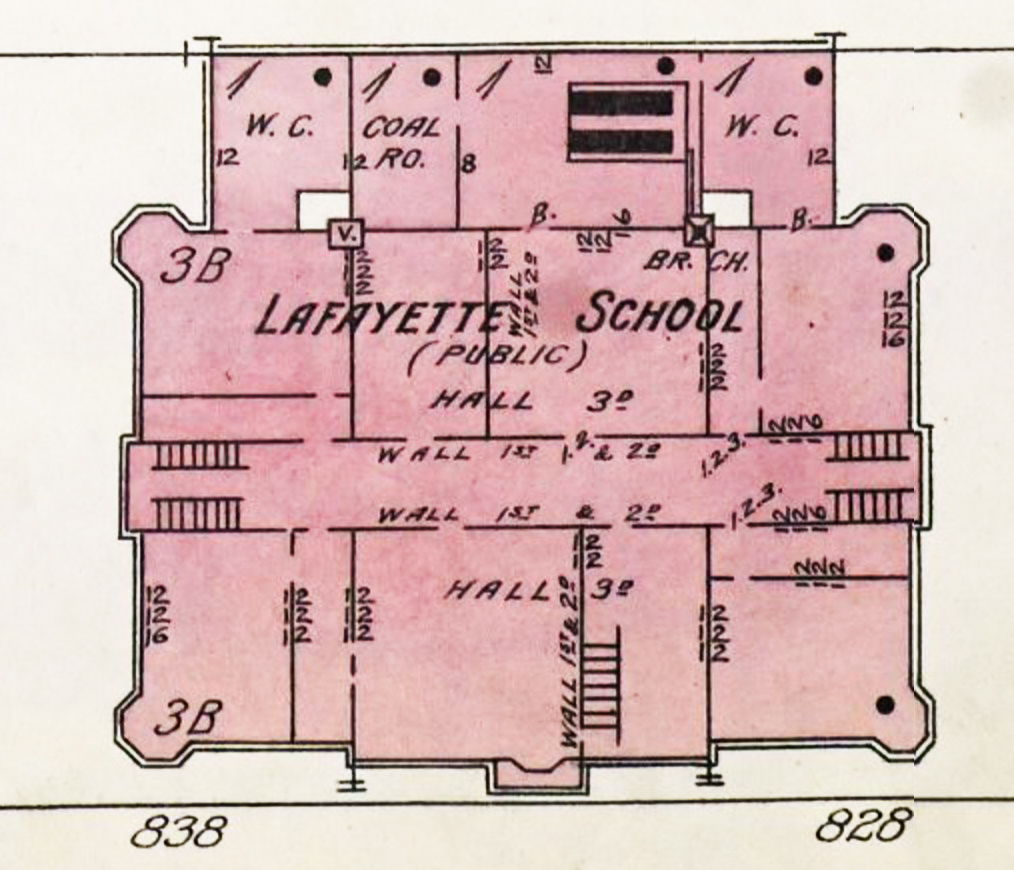
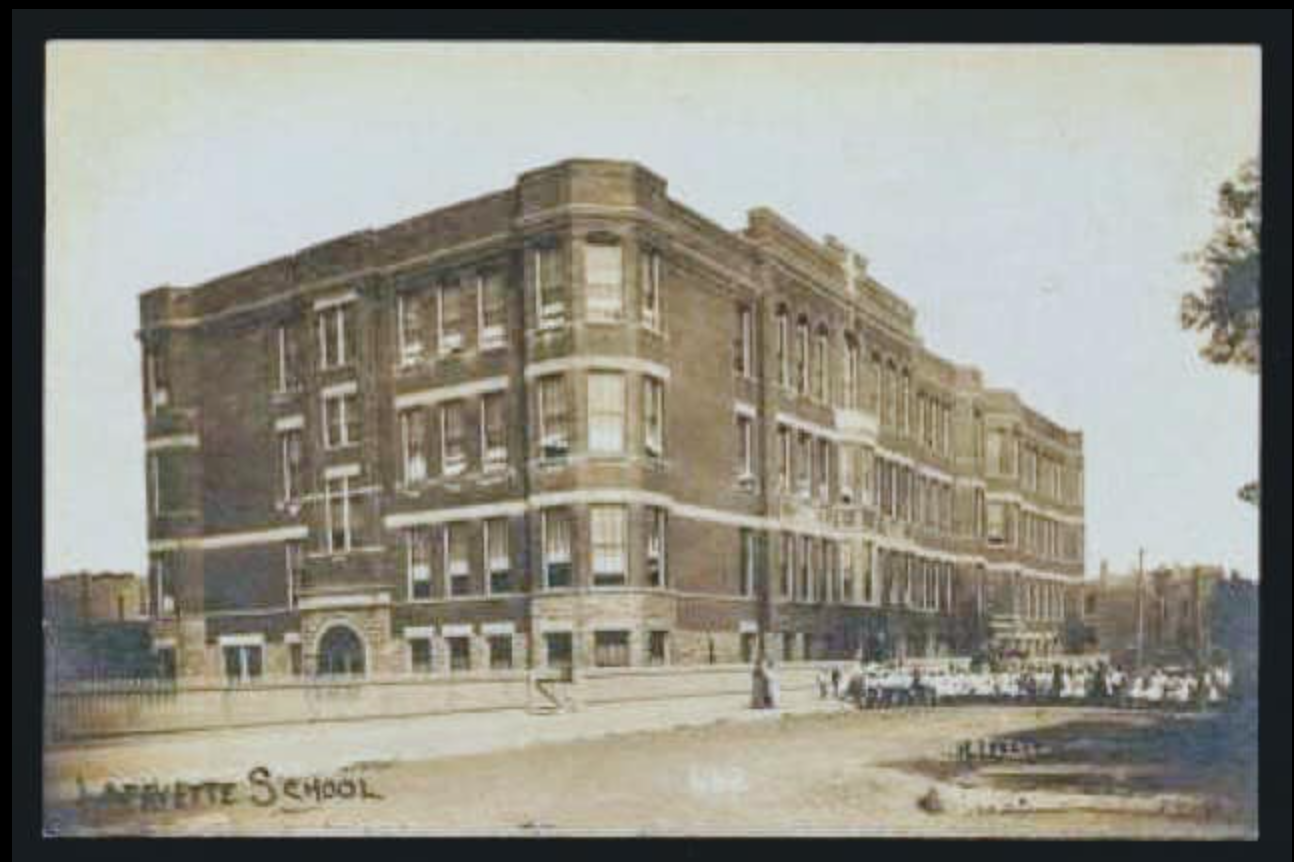
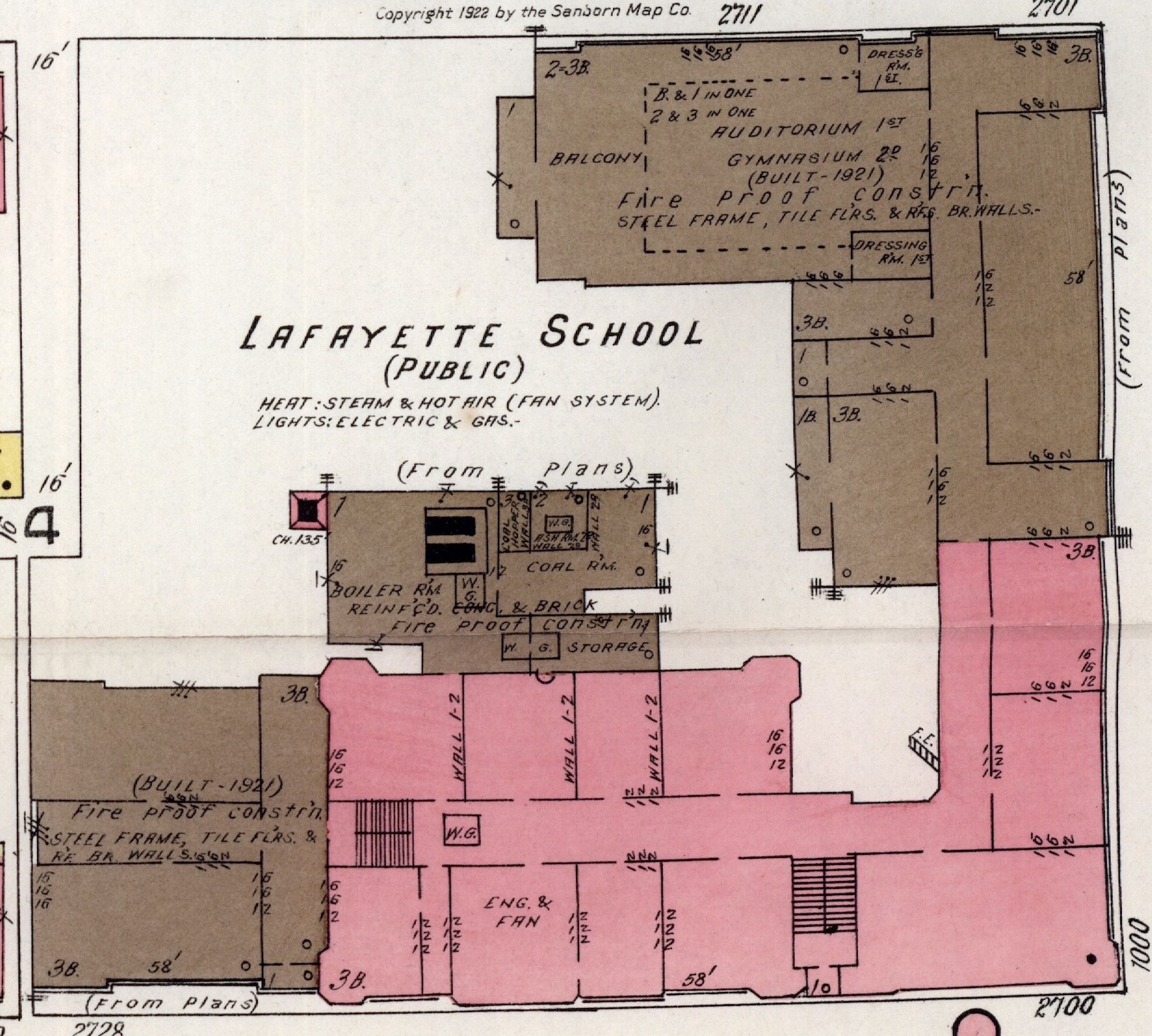
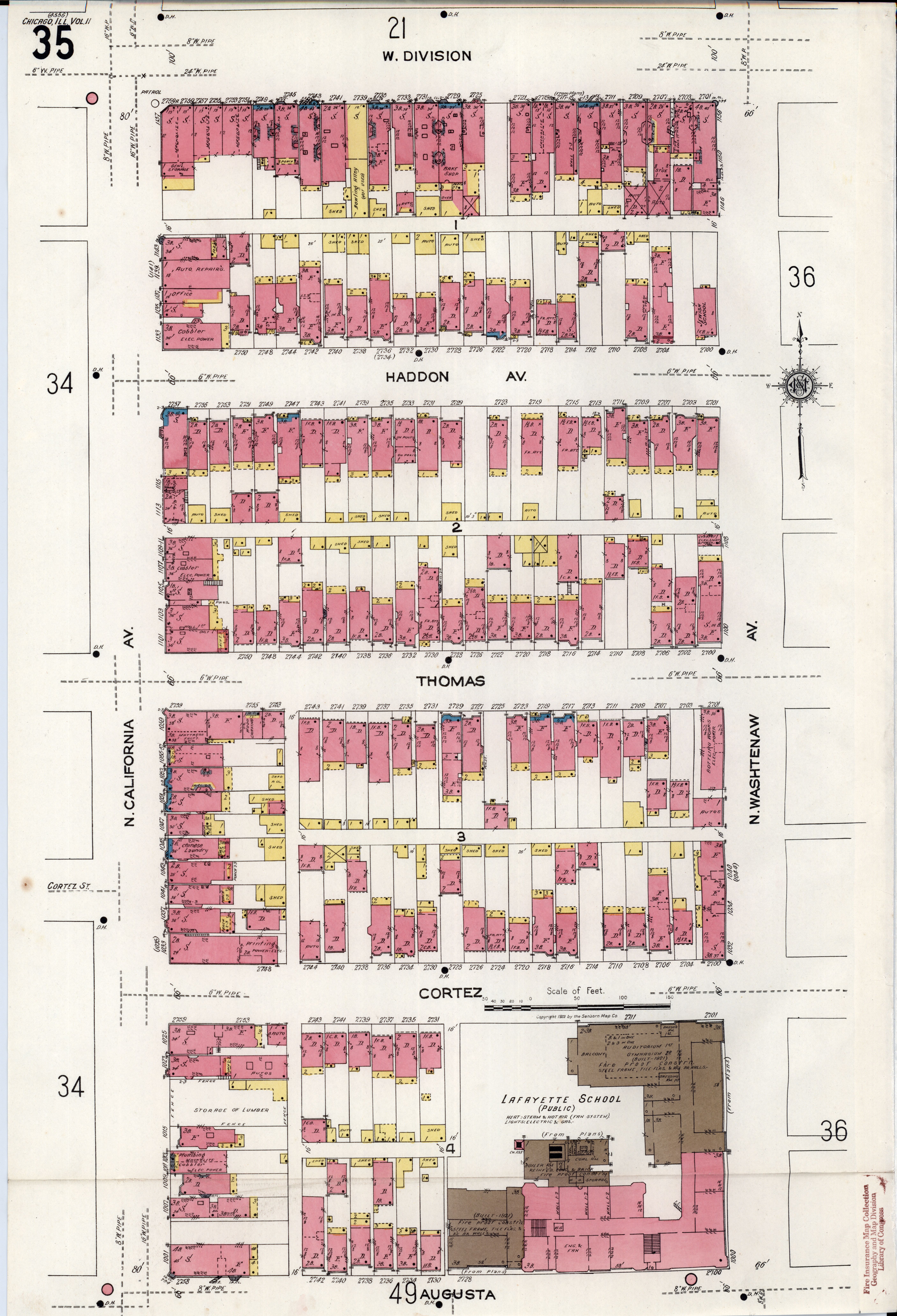
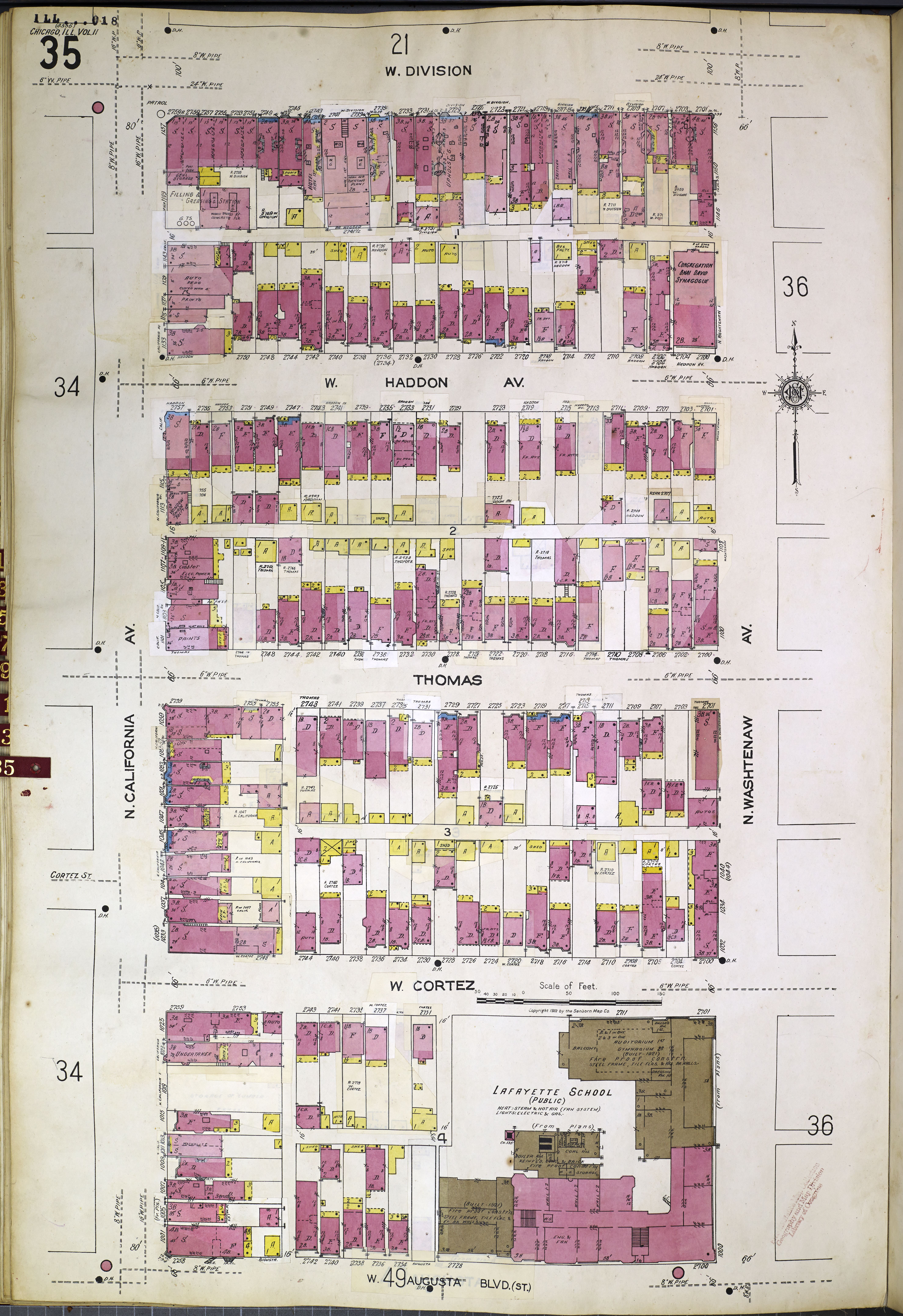
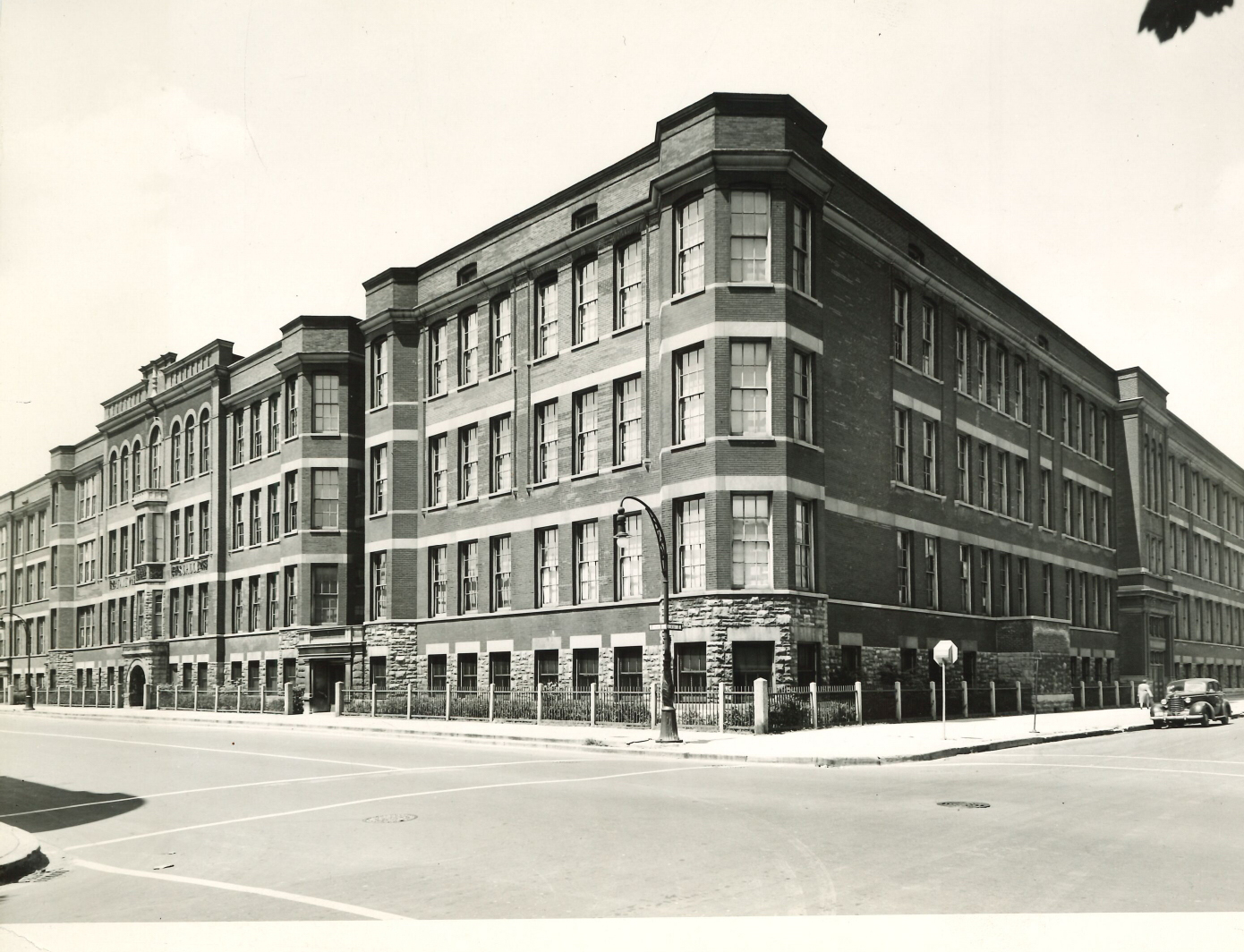
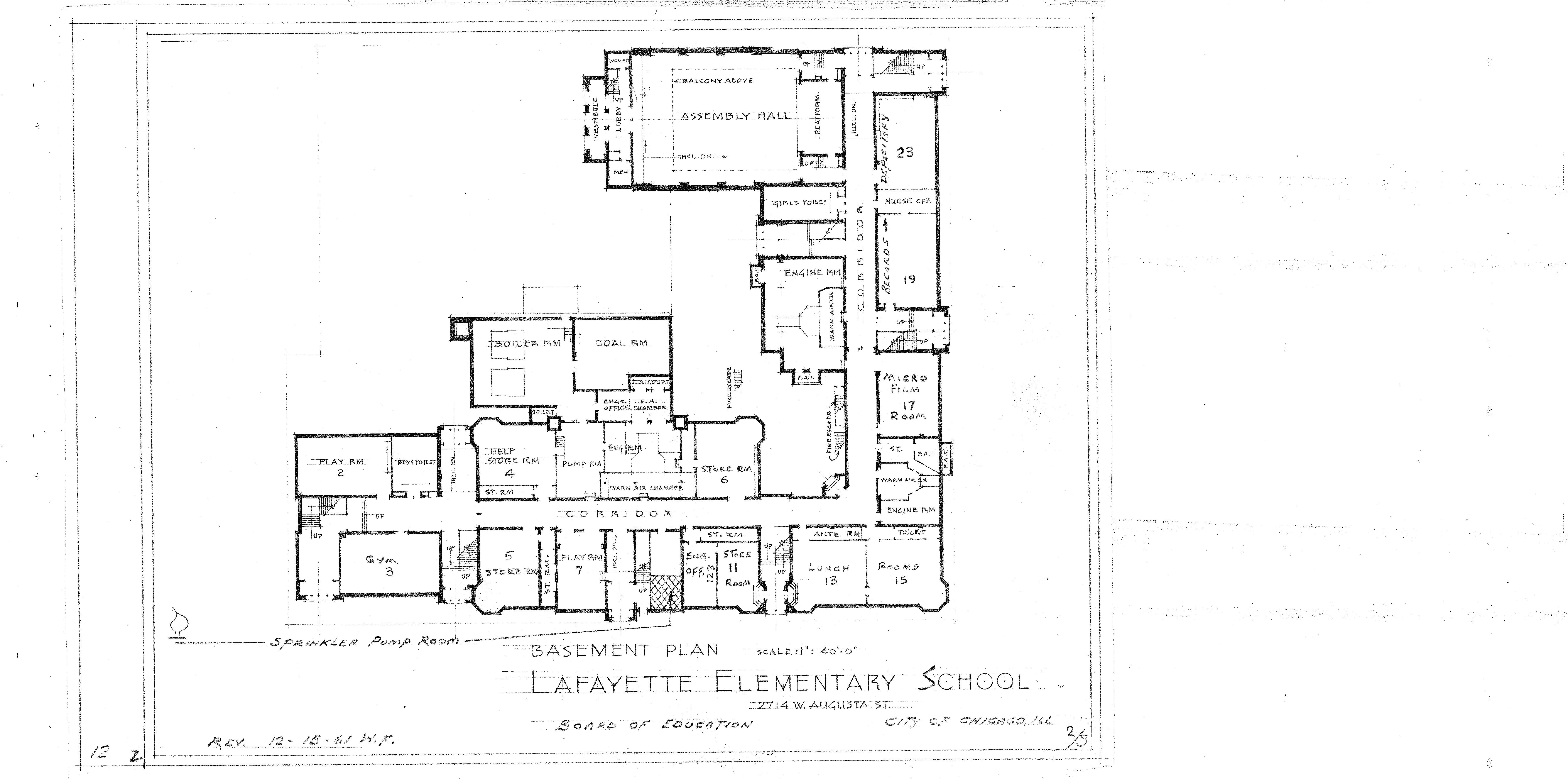
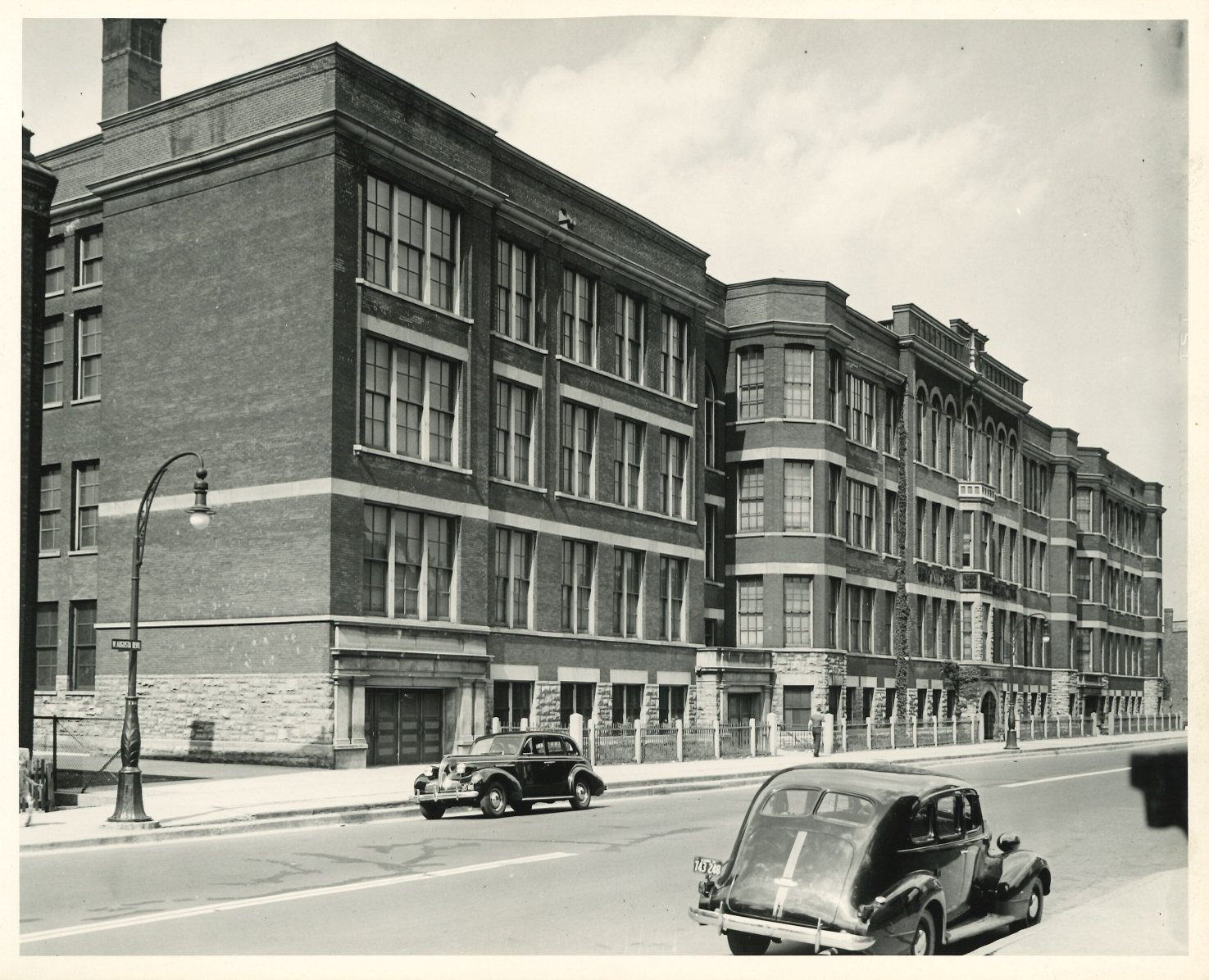
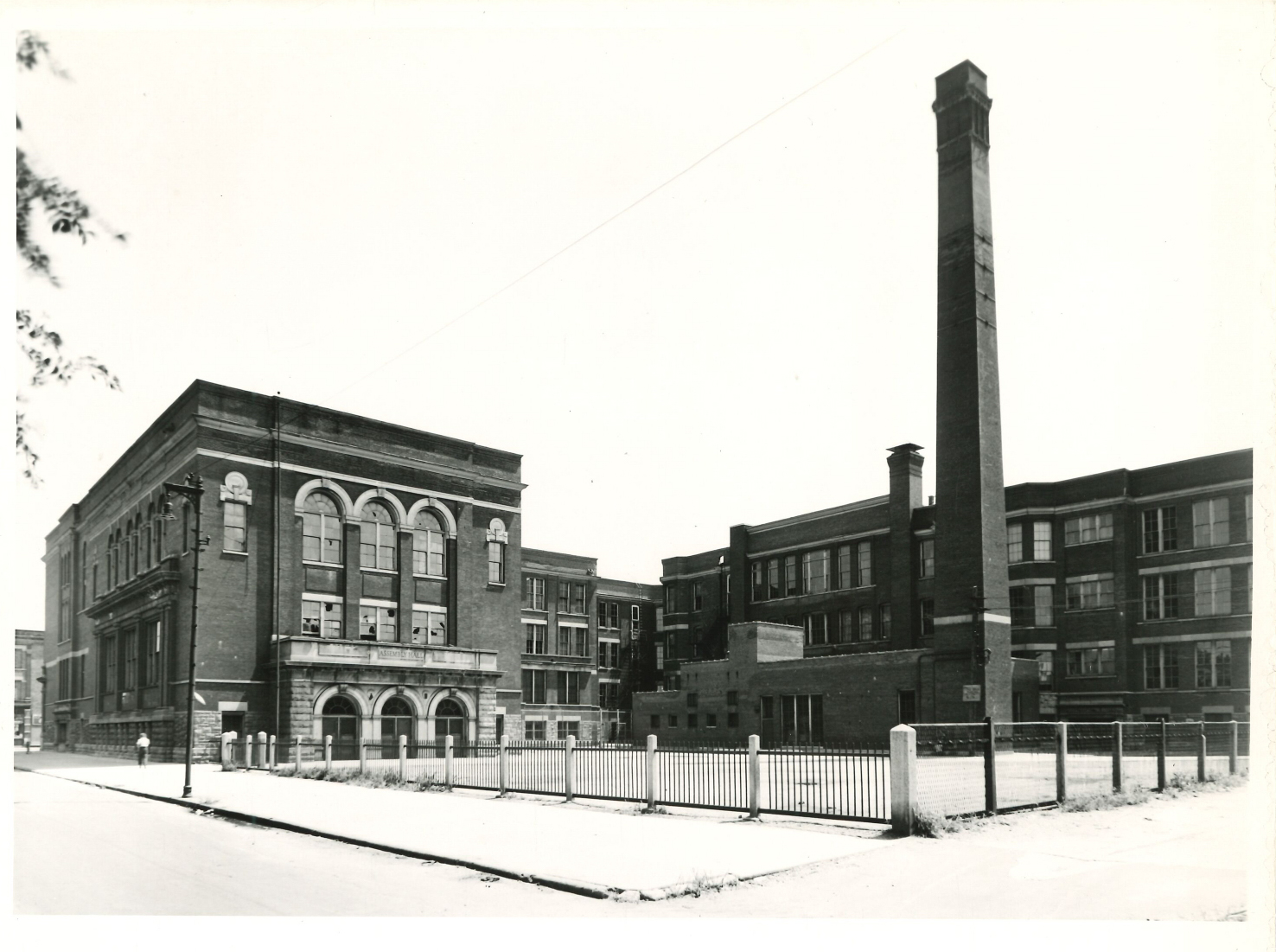
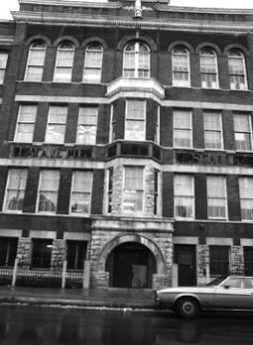
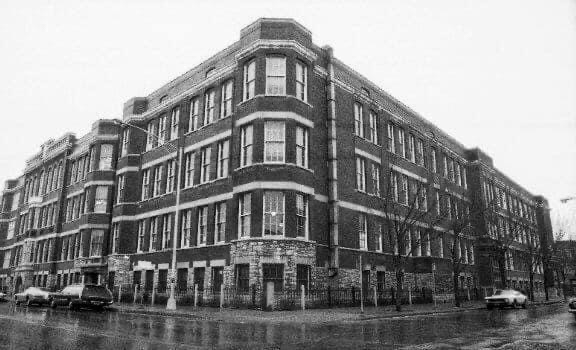
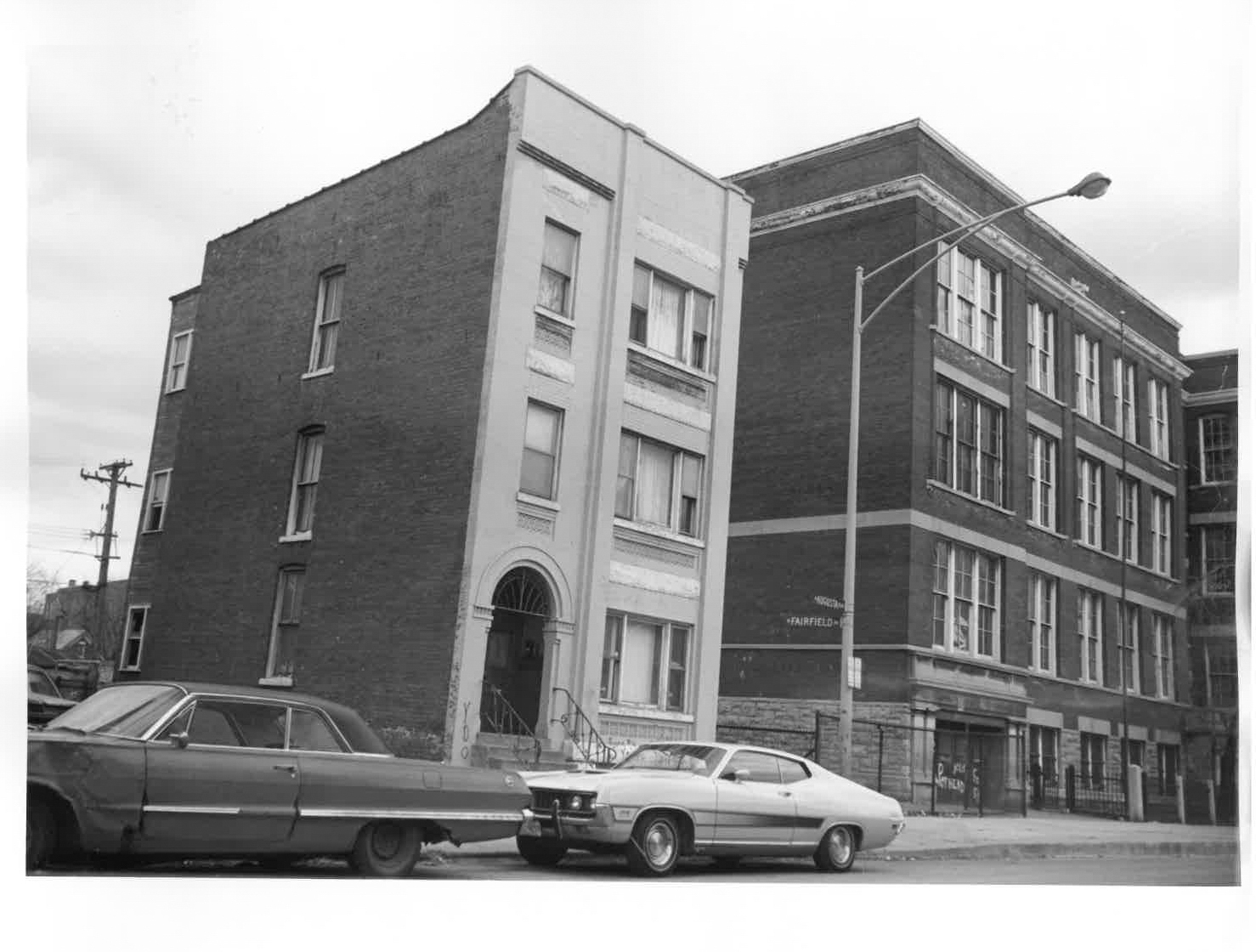
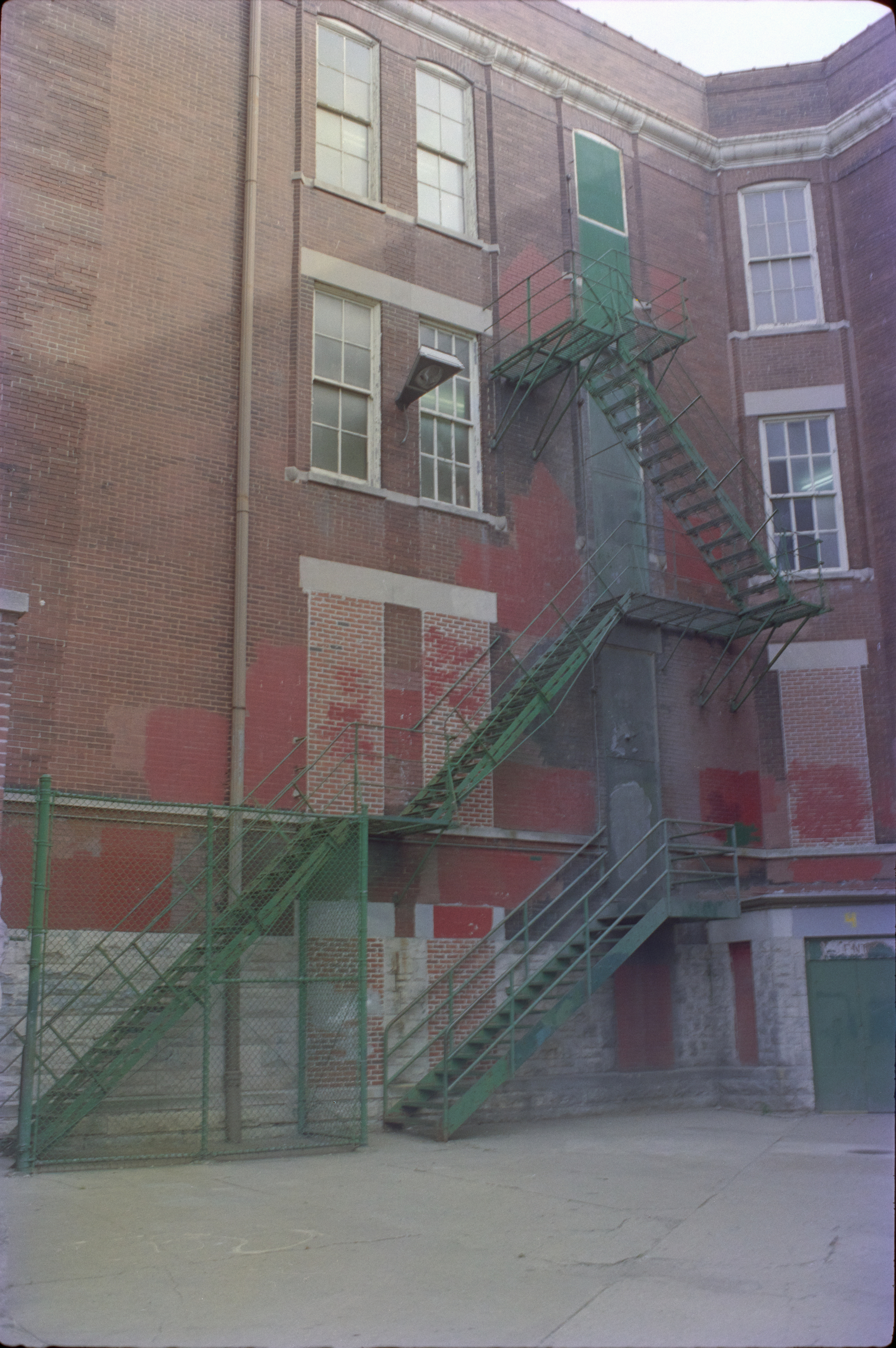
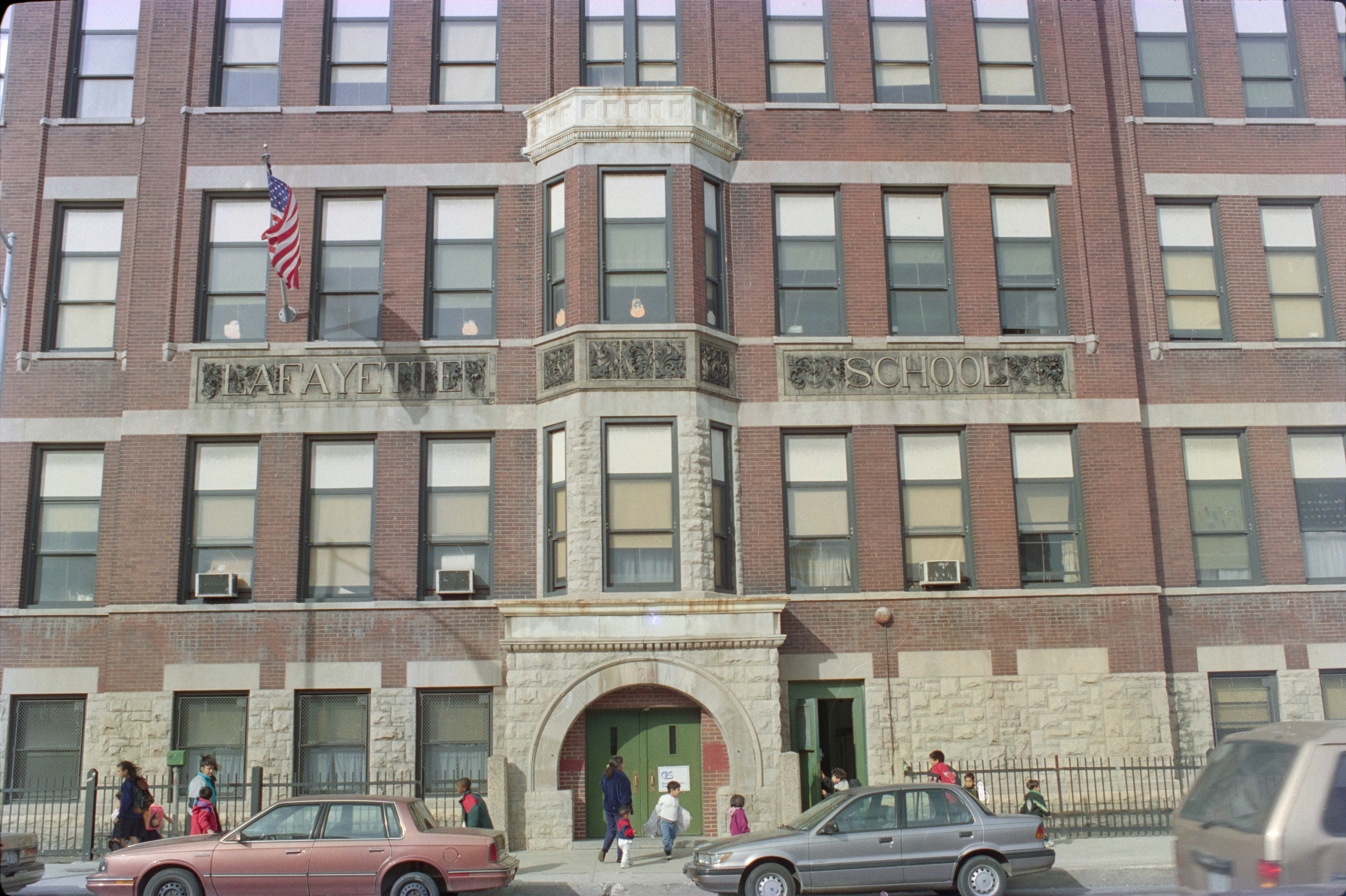
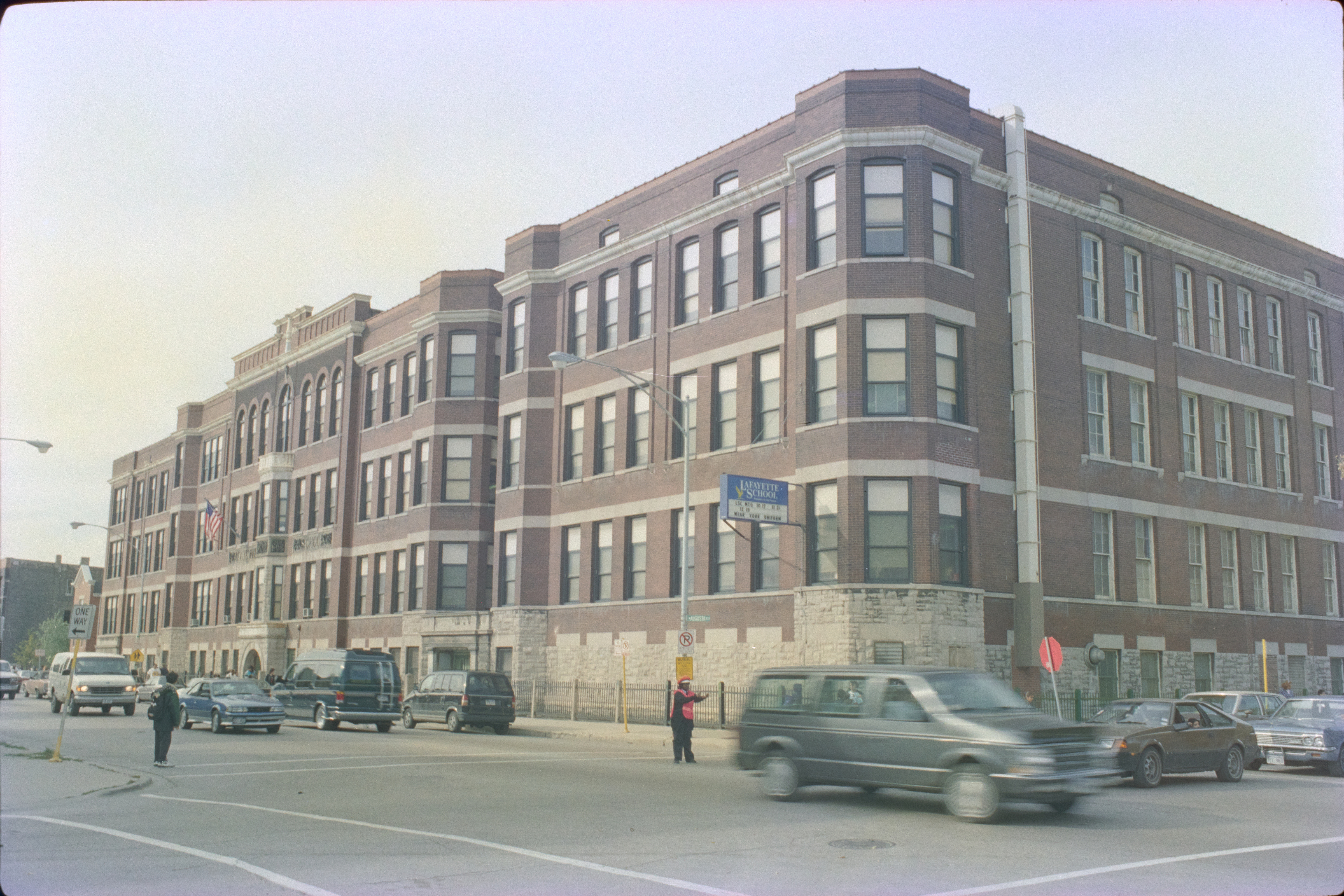
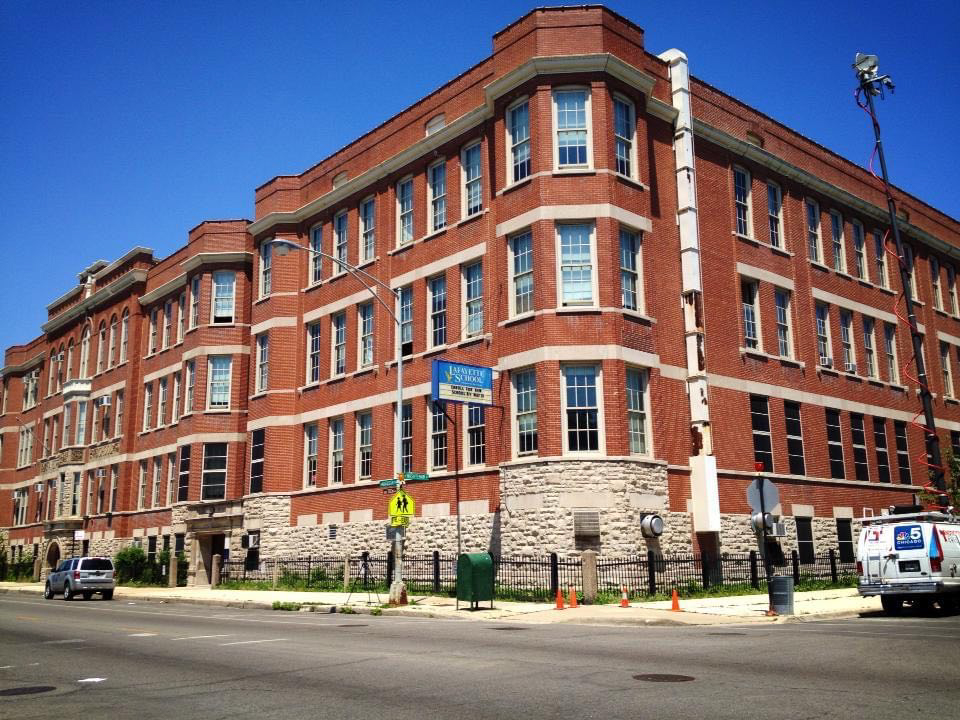
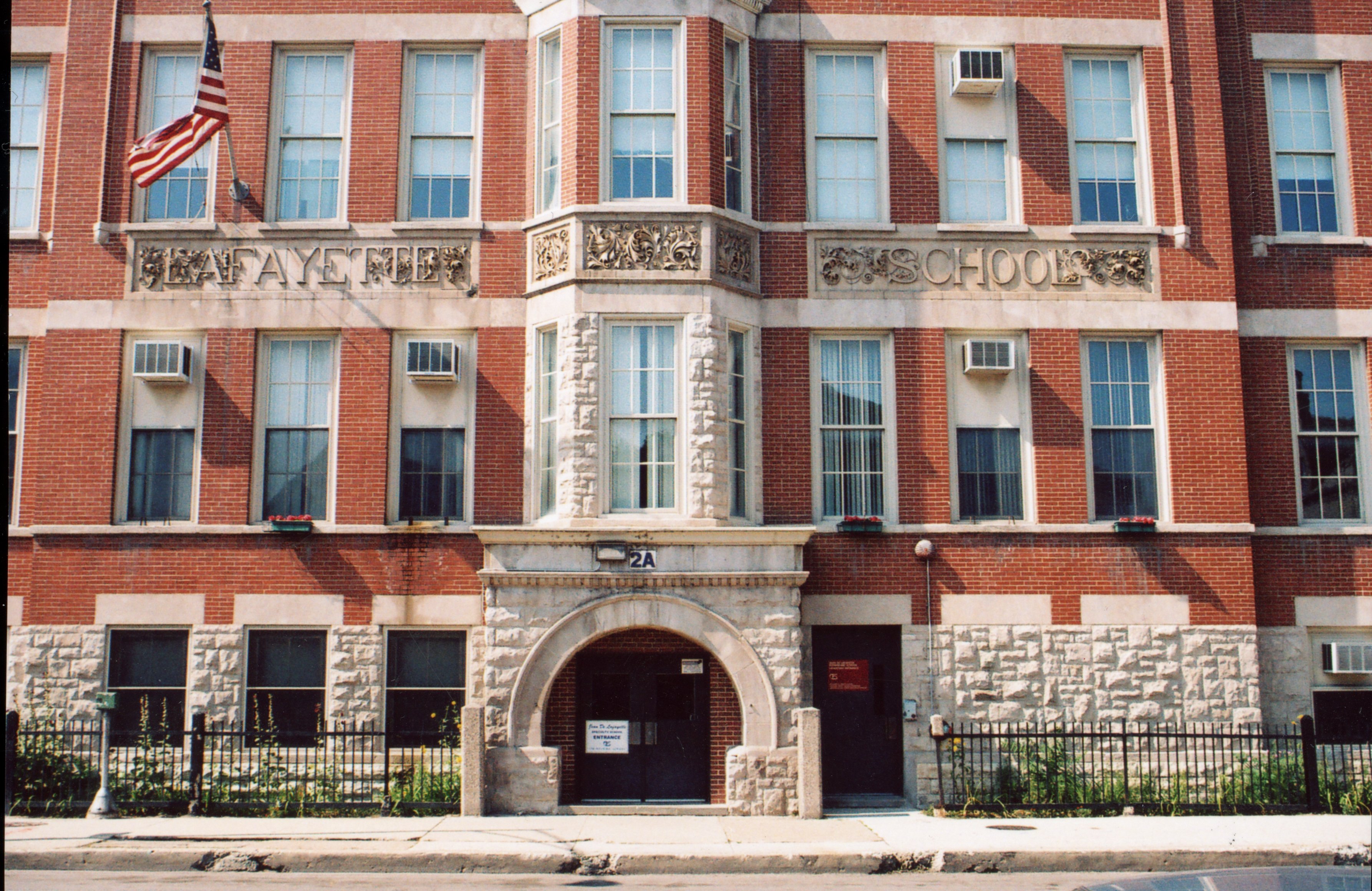
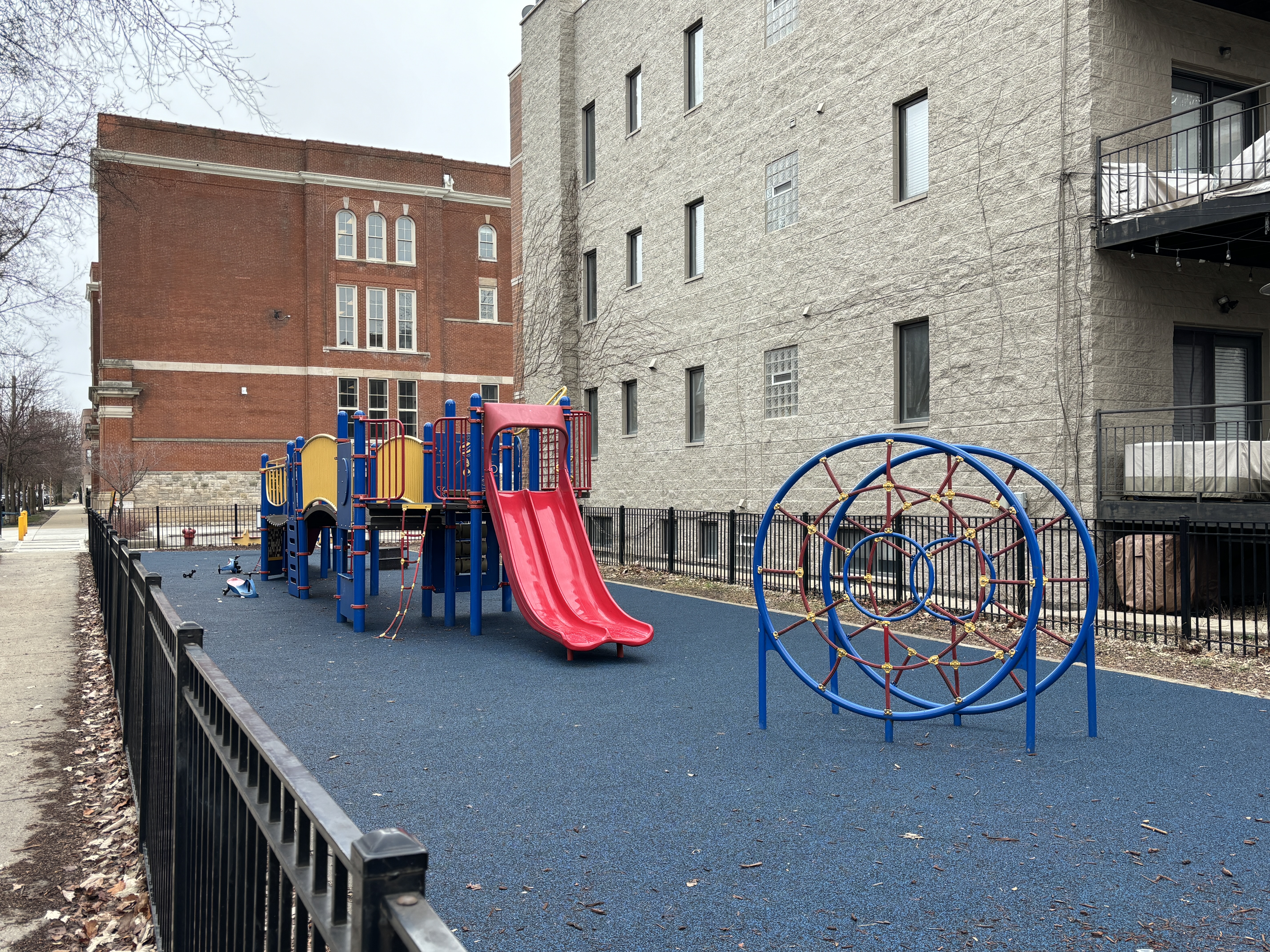
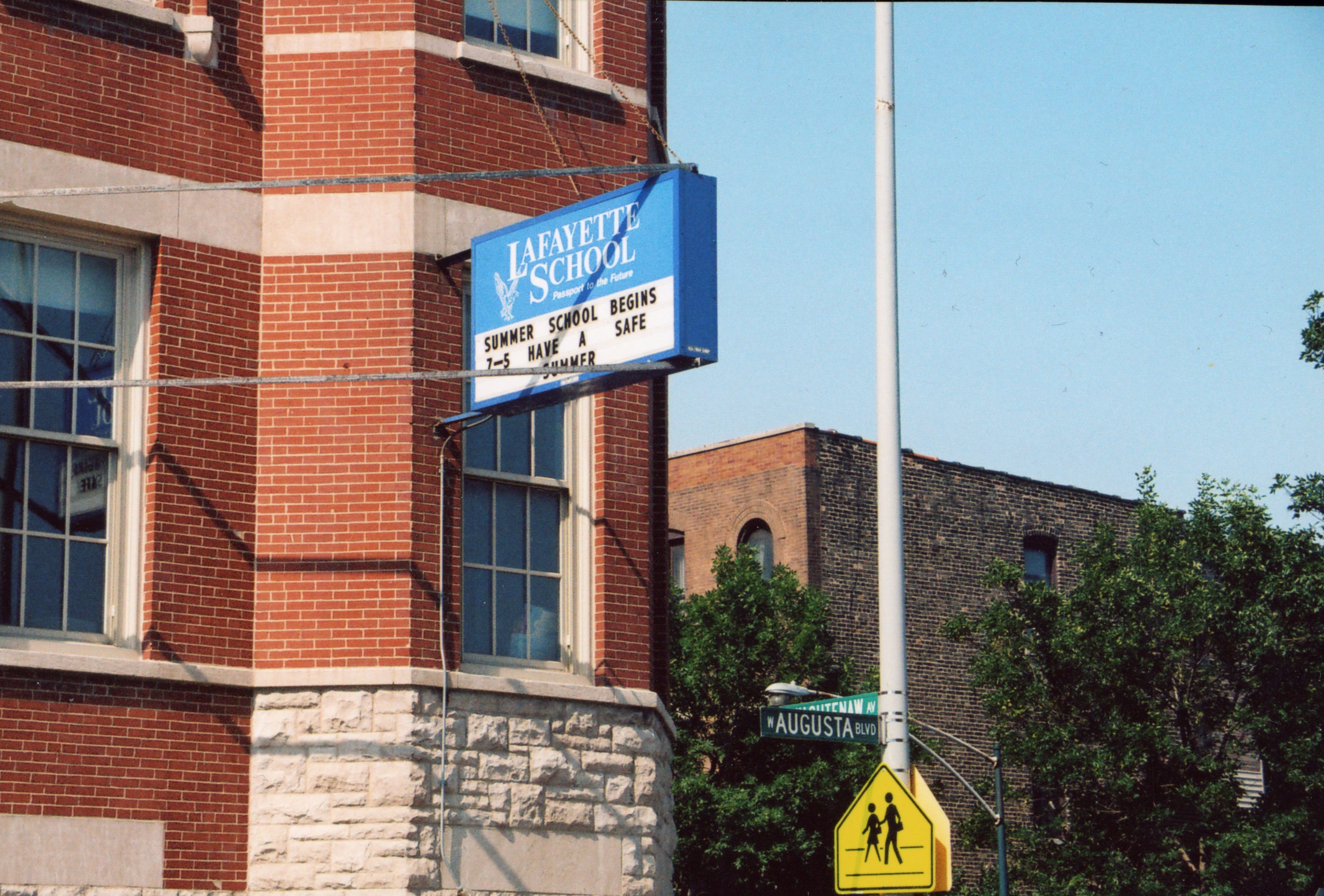
The exterior and maps of the building not only provide us with the visual knowledge of the extensions added to the building, but they also give us insight to the ever-changing world happening outside the building – inherently shifting what happened inside the building. Some of the changes include (but not limited to) the neighborhood infrastructure like the appearance of streetlights and sidewalks. You will also the surrounding apartment buildings and seeing the preservation vs demolition of specific buildings or even like seeing the shift of cars overtime with the consistent backdrop of the building as Lafayette was constructed with the intention of the building to last over centuries.
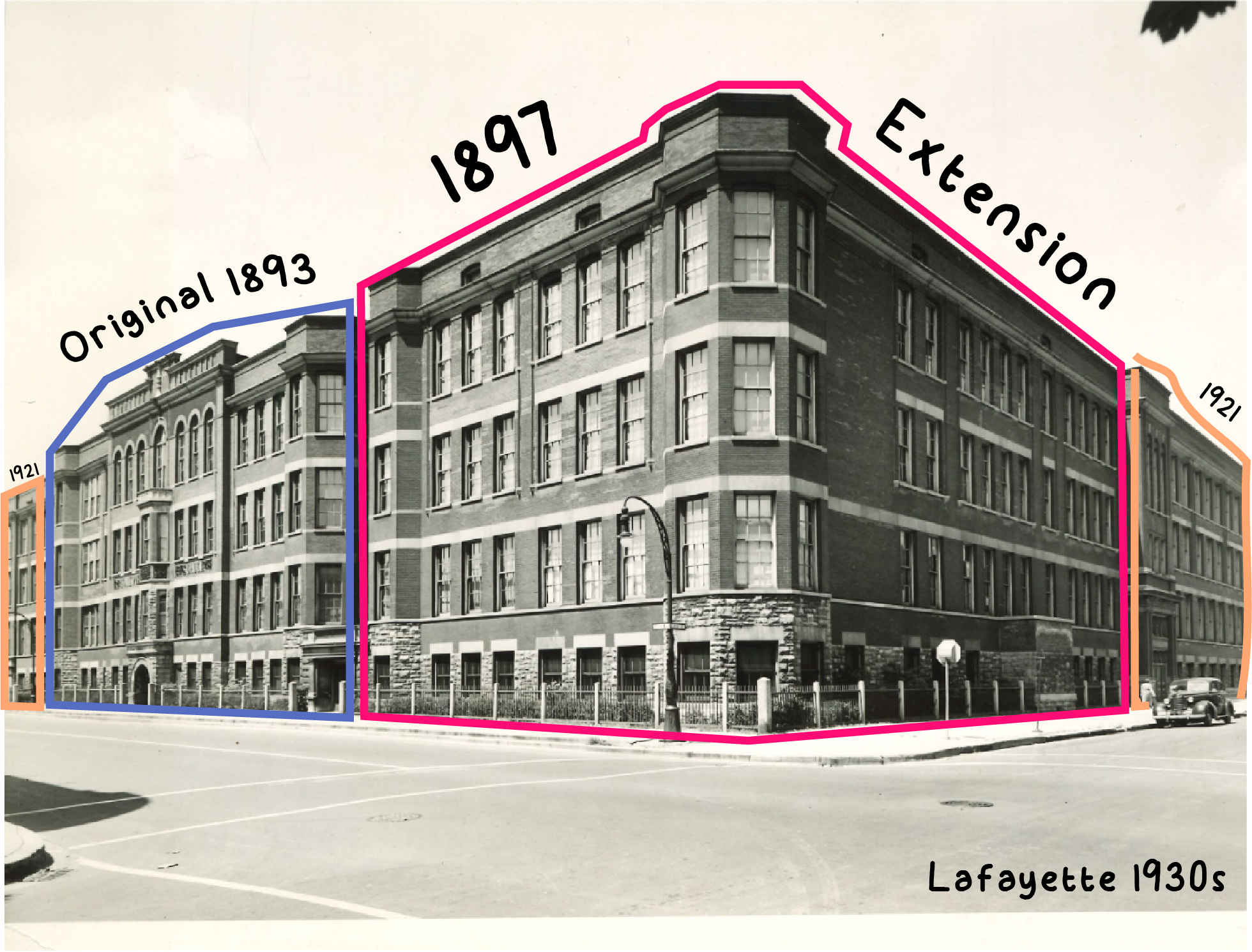
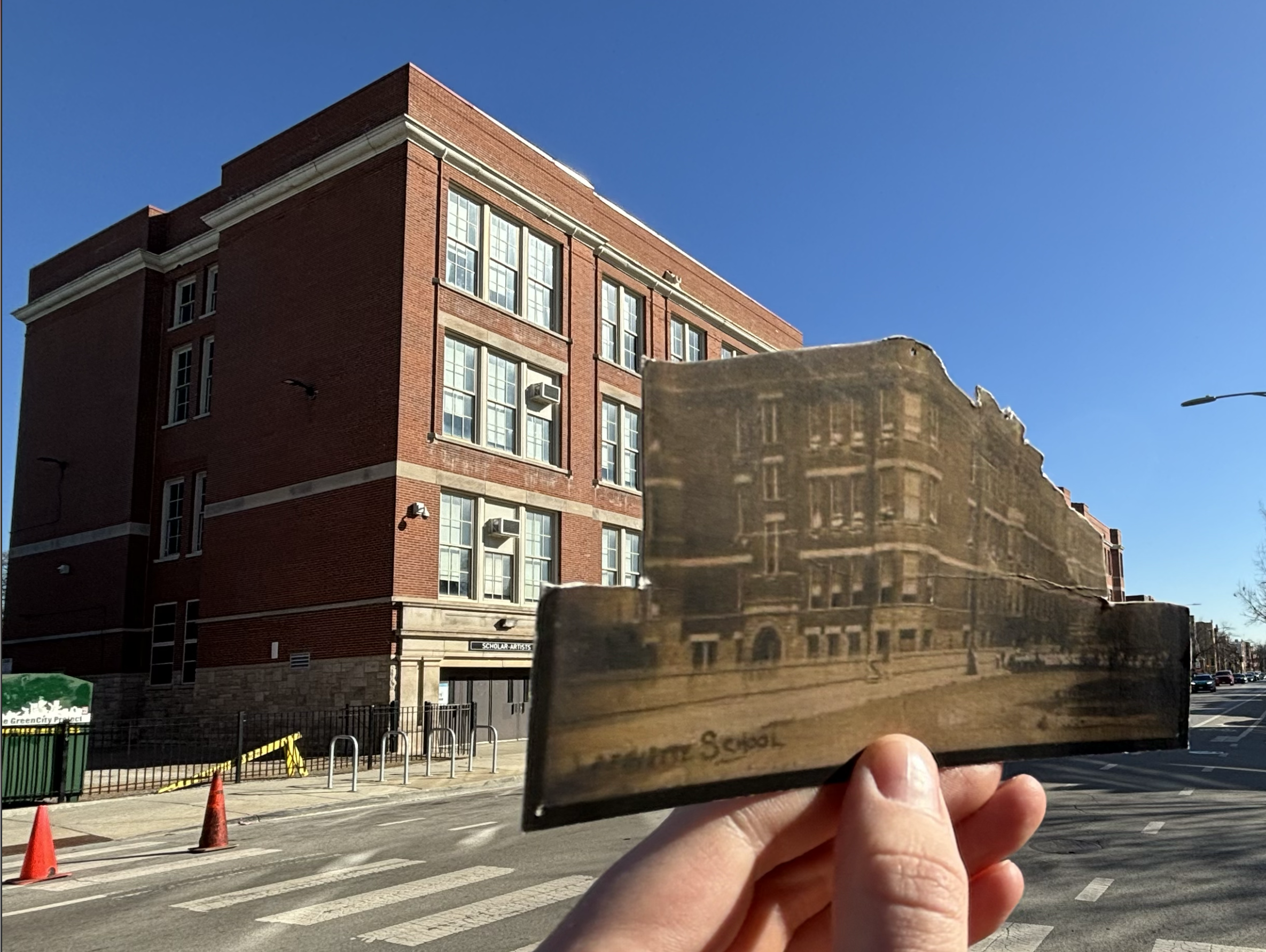
With the range of years of construction, these differences can be heard directly in each footstep while walking inside the building to this day. The 1893 and 1897 builds not only have the same exterior architectural styles, but it also came at a time where standards of materials evolved at the turn of the century. In the 1893 and 1897 builds, each footstep comes with a subtle creak-noise as the structure is a mix of cement and wood. Once you enter the outer builds of the building on the north and west ends of the building, each footstep become silent as the structure in only cement.
Rooftop Perspective
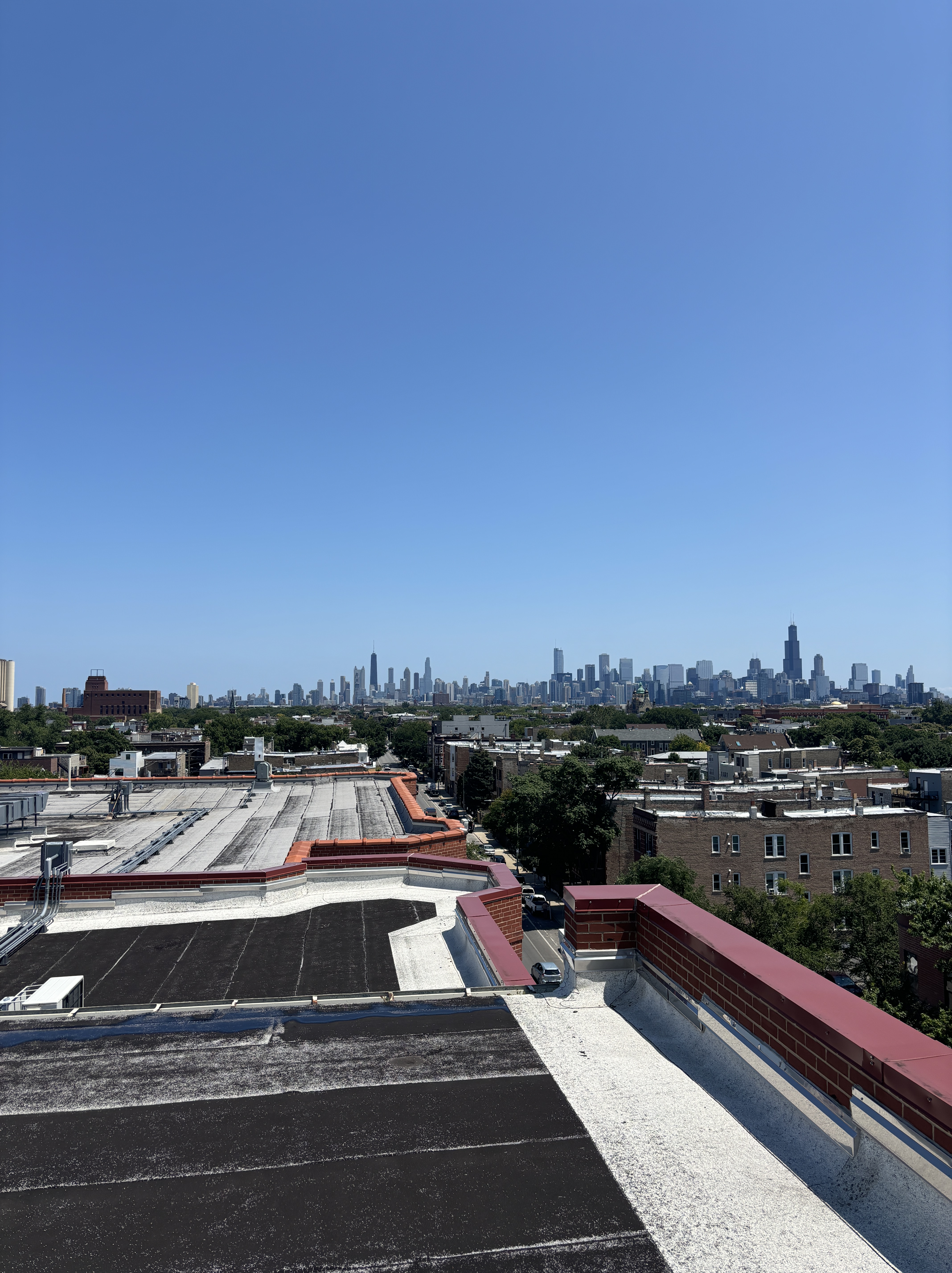
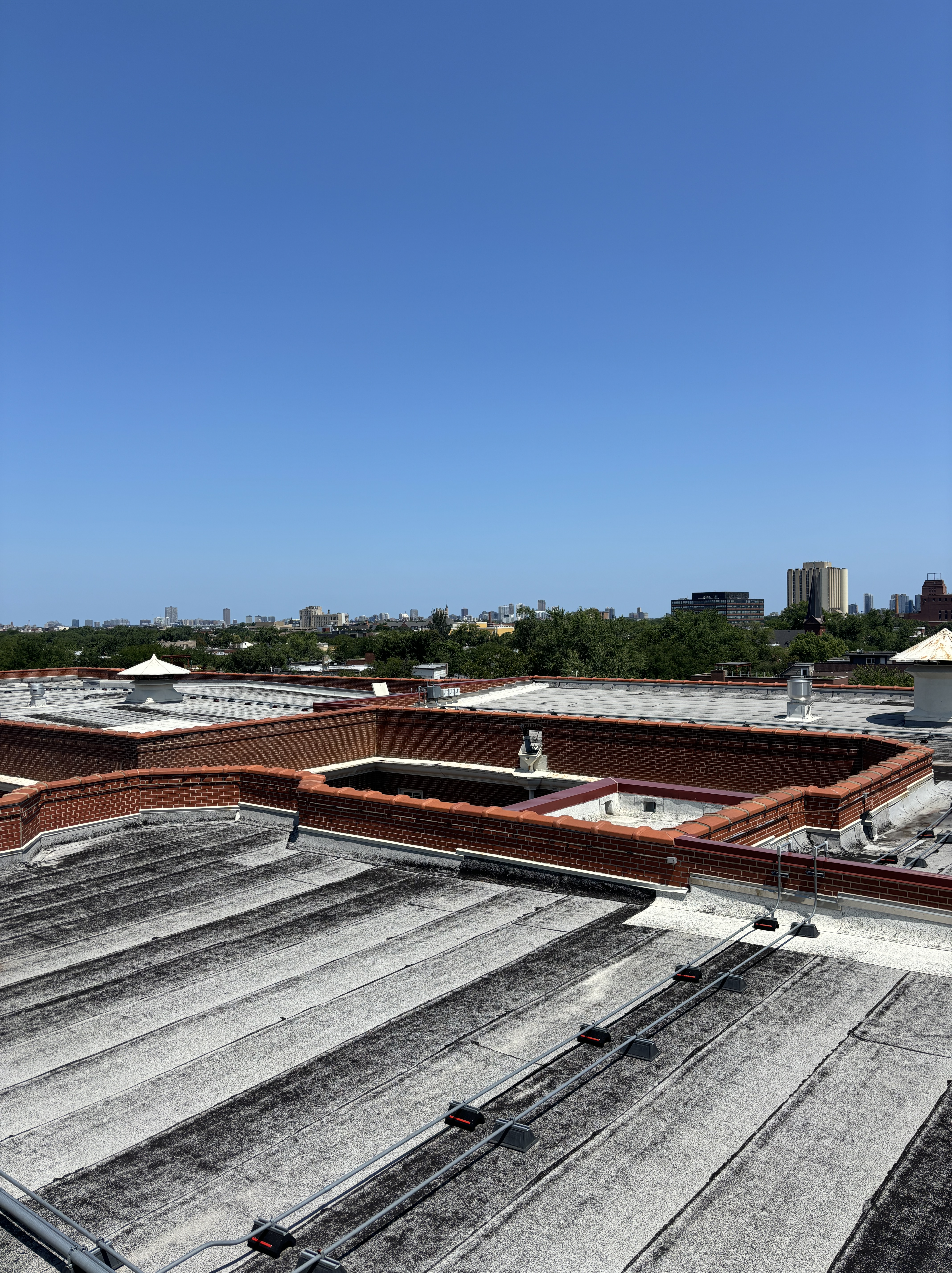
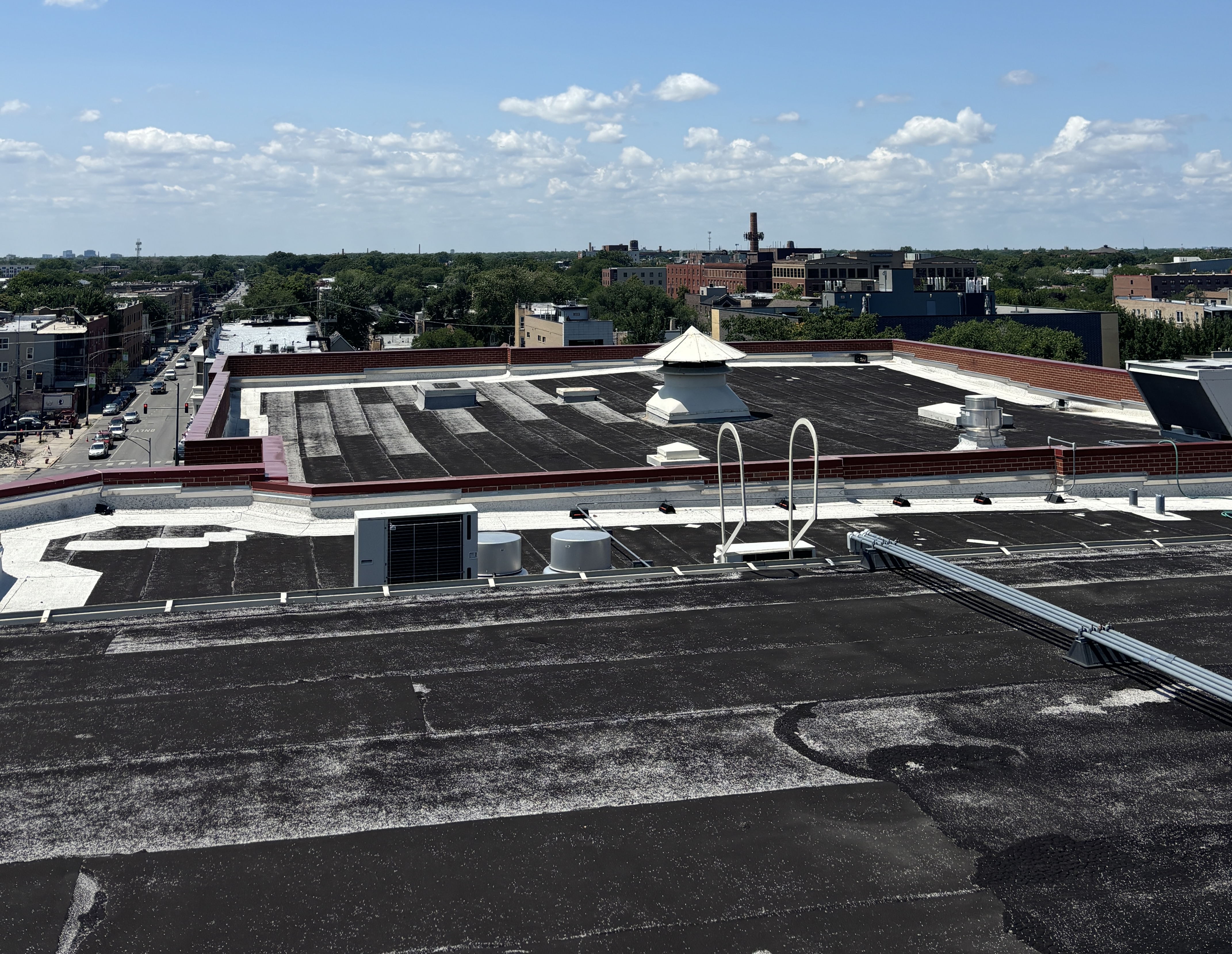
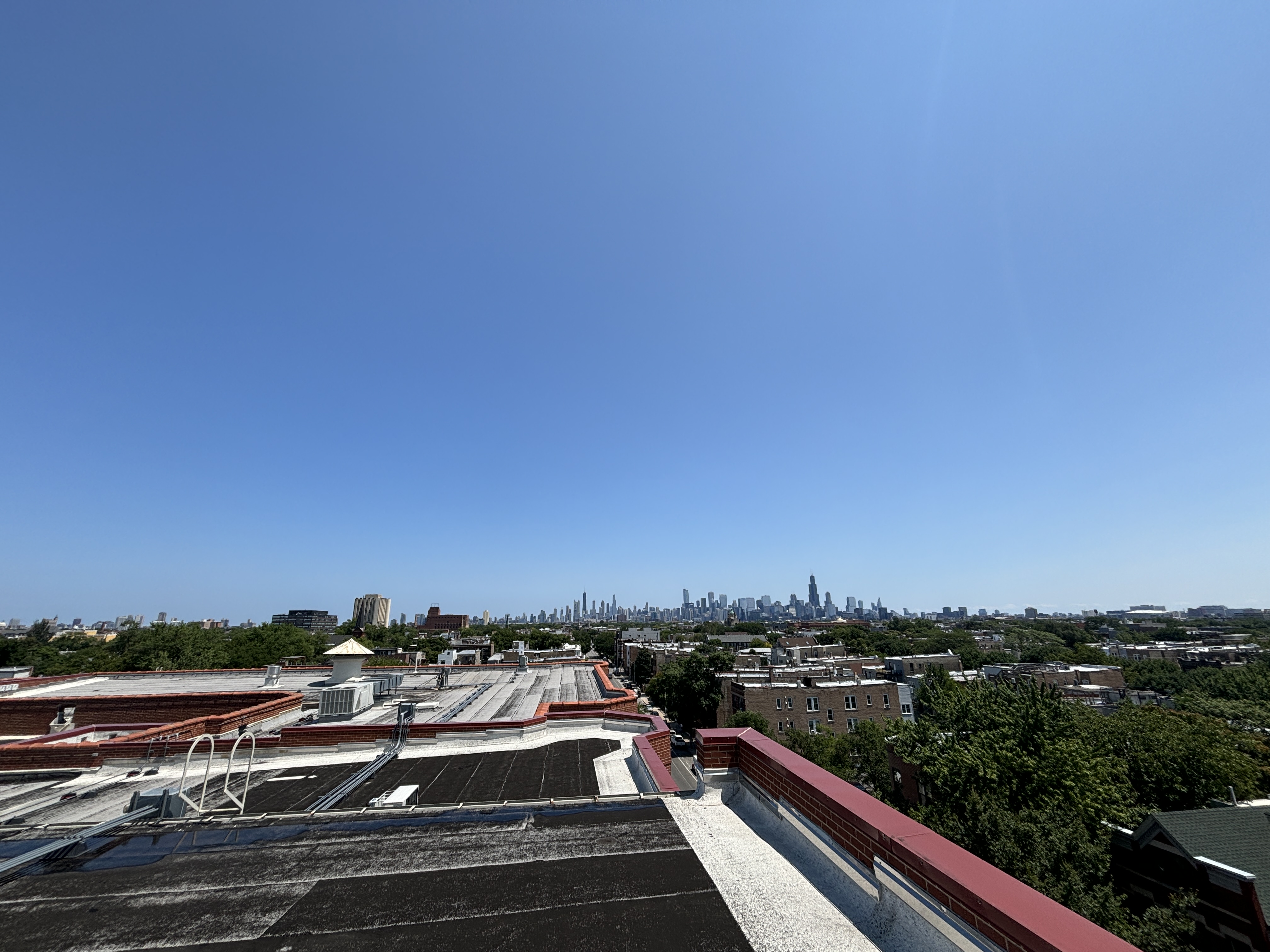
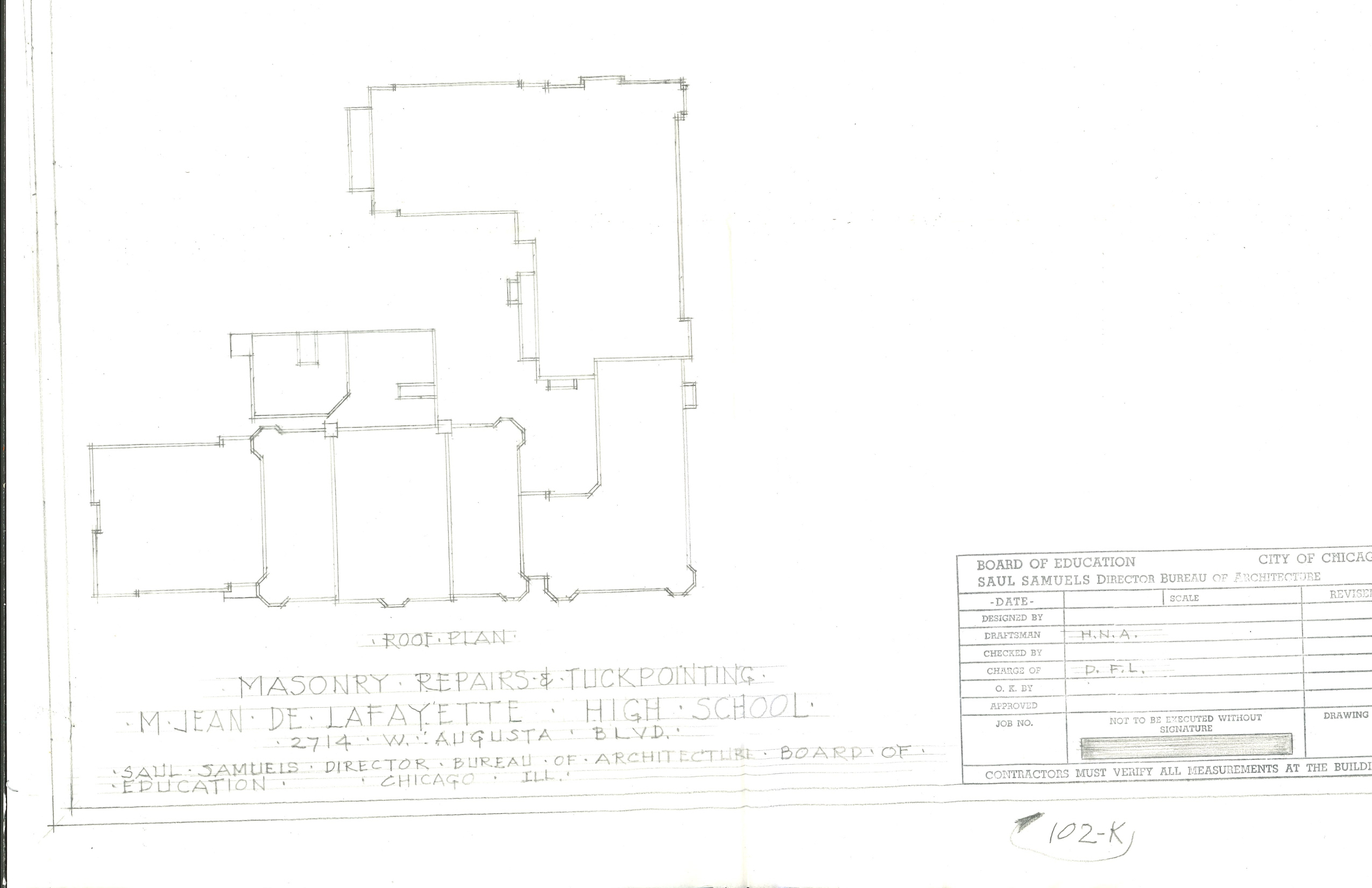
The 3 different years of the building’s construction can also be seen from above as each structure was built outward. The tops of each edition divides the roof up into 4 parts (2 of these editions from 1921 as the building expanded both north and west), distinguishing each era of construction.
The following maps and photographs are ordered chronologically to take you through different eras of the building.